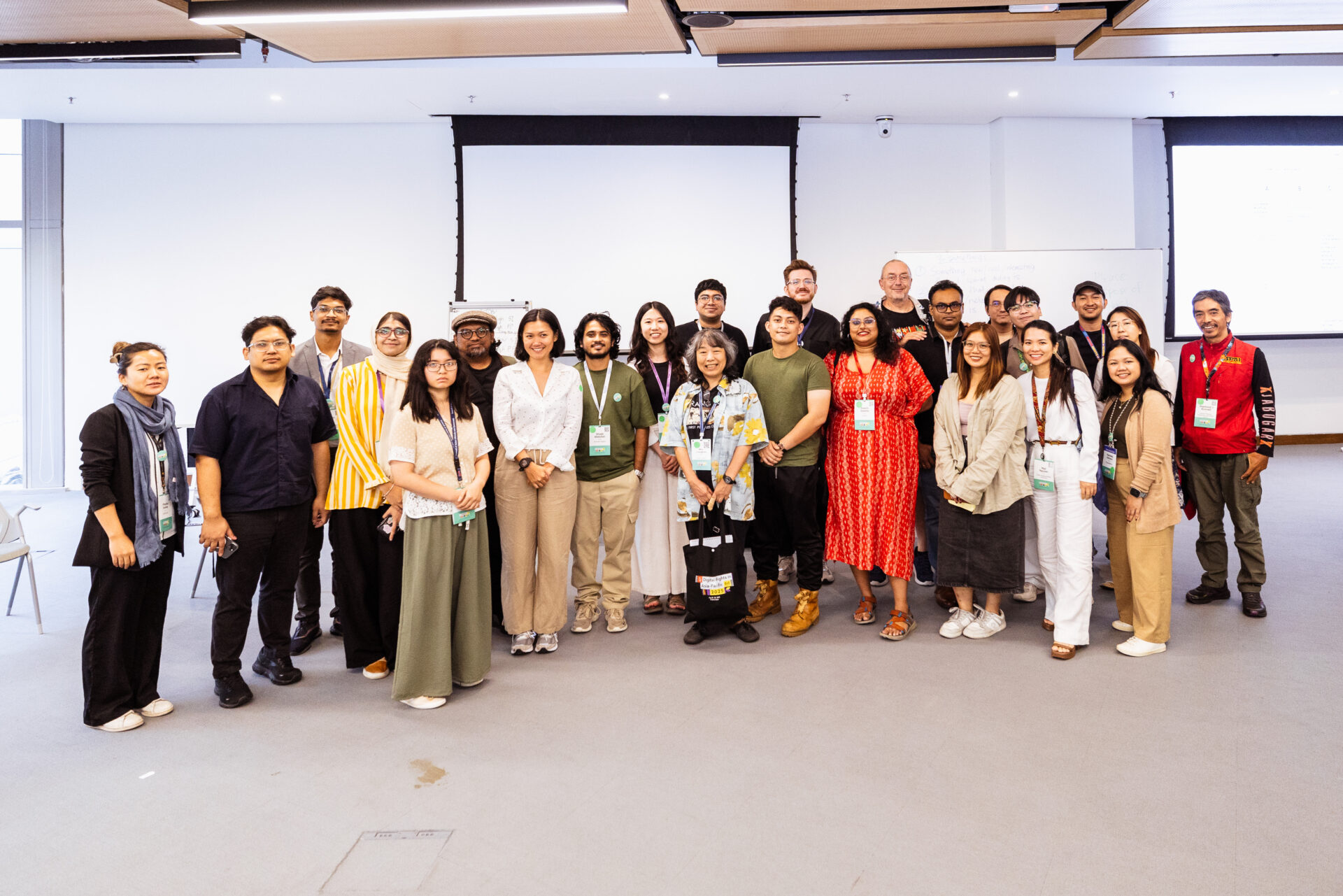
The Open Tech Camp Kuala Lumpur was jointly organised by EngageMedia and ASBhive at the Asia School of Business, building on the success of Open Tech Camp Penang and aligning with DRAPAC25 Kuala Lumpur.
This unconference brought together more than 100 technologists, activists, social entrepreneurs, academics, and human rights defenders from across Asia-Pacific and beyond on the last day of DRAPAC25. With more than 25 participant-driven sessions across four thematic tracks – civic engagement and public participation, environmental protection and sustainable development, socio-economic progress, and open tech for all – the camp served as a space for skills-building, knowledge-sharing and collaborative problem-solving where participants explored open-technology solutions.
Highlighting Digital Security Tools and Resources
The need for digital security tools and resources, as well as its challenges, were emphasized. During the joint session covering “Tools Against Digital Forensics for HRDs and Journalists” and “Digital Security in Practice: Gaps, Challenges, and Ways Forward” by Vox and Jin, participants raised concerns around government use of forensic tools and lawful data extraction via device manufacturers. Resource constraints across NGOs — limited IT staff, short one-off trainings, difficulty scaling support — were also discussed alongside the need for community-level frameworks for sharing technical support and legal aid instead of single-organization solutions. Defensive tools and tactics against digital forensics shared included Signal, Tella, VeraCrypt , Bit-shifting in WinHex and local password managers, among others, but with the agreed emphasis on awareness, basic hygiene, and accessible tools. If there’s a one-line takeaway from this session, it would be to strengthen human-centred awareness, pool technical resources regionally, and provide ongoing localized, hands-on training against forensic and other digital threats.
Examining Alternative Infrastructure
The myths and realities of satellite internet were tackled. Participants in the session facilitated by Dinah and Don Le critically examined four common claims about satellite internet—whether satellites can reliably bypass censorship and shutdowns, whether satellite service is affordable and easy to deploy in rural areas, whether satellites guarantee digital sovereignty, and whether they are ideal for crisis response and wartime resilience. Participants evaluated evidence for and against each claim, identified beneficiaries and the political actors who amplify these narratives, and flagged technical and policy details often missing from public discussion (true costs, infrastructure limits, regulatory constraints, and surveillance risks). The session concluded that simplified claims obscure important human-rights implications—including unequal access, equity concerns, privacy and surveillance threats, risks of corporate capture, threats to national sovereignty, and security vulnerabilities—meaning policy and deployment decisions must account for realistic technical limits, economic barriers, regulatory frameworks, and the potential for misuse.
Analyzing and Countering Disinformation
Rowella and Memee presented complementary sessions on disinformation in Southeast Asia. Rowella introduced an Archetypes Model that classifies influence operators by genre, sector, motivations, and strategies, showing why some actors evade standard countermeasures (e.g., fact-checking) and enabling targeted interventions and a shared vocabulary for mapping influence operations. Memee presented Milk Tea Alliance Thailand report which traced how disinformation narratives in Thailand weaponize digital platforms to stoke xenophobia—consequences that have included physical attacks on Burmese activists—and used Power vs. Influence and Effort vs. Impact frameworks to map actors, platform-specific amplification tactics, and promising youth-led counter-strategies. Together the sessions link actor motivations to real-world harms, highlight regional parallels in manipulative tactic, and call for sustained, motivation-aware, regionally grounded online and offline responses to resist xenophobia, corporate and state-enabled influence operations, and the broader disinformation economy.
Incorporating Feminism in Digital Life
Two sessions center feminist interventions in digital life across Southeast Asia. “Glitching the System: Feminist Resistance and Reimagination in the Digital Age” facilitated by Afifah shares that digital infrastructures have re-inscribed patriarchal binaries and control—via algorithms, moderation, deepfakes, and other technologies—and frames “glitch feminism” as a strategic refusal: errors and disruptions that expose bias and open pathways for collective resistance, creativity, and alternative futures. The session highlighted Southeast Asian feminist and queer practices that transform digital harm into sites of care, counter-narrative, and multiplicity, and allowed participants to map harms, learn glitch-based tactics, and co-create visions of nonconformist digital futures. Complementing this, “Feminist Privacy: Reclaiming Agency” session facilitated by Yumna critiques Global North universalist framings of privacy and reinterprets privacy through Indonesian and Global Majority lenses—where privacy intersects with communal values, concepts like shame, state control (e.g., coercive family planning), and gendered bodily interventions that disproportionately harm women and trans people. The session helped surface context-specific meanings of privacy, document how power and gender shape private life, and support participants in imagining and writing toward futures where the privacy and bodily autonomy of women and gender minorities are respected.
Utilizing Tech Tools for Archiving, Reporting and Storytelling
Shoeb’s session highlights that in contexts of political repression and digital surveillance, archiving becomes an act of resistance. This session highlighted the role of community-led documentation in revealing human rights abuses, maintaining collective memory, and combating erasure. It examined various tools, strategies, and lessons learned from Bangladesh and West Papua, providing practical guidance for establishing community-led archives in environments characterized by high risk and surveillance. The discussion included examples of ethical, secure, and locally relevant workflows for preserving and verifying visual evidence, along with strategies for transforming archival work into ongoing advocacy and avenues for justice, such as utilizing archived evidence for open-source intelligence (OSINT) investigations.
Related to OSINT, Samik led a discussion on “OSINT for Reporting Crisis Afar” where participants examined how OSINT is revolutionizing investigative journalism. This approach allows reporters to access, verify, and analyze publicly available digital information without needing to be physically present, which is particularly beneficial for journalists working in conflict zones, oppressive regimes, or resource-limited areas. Topics of discussion included the growing significance of OSINT in storytelling, ethical obligations and limitations of verification, platform accountability and the risks of misinformation, the potential misuse of OSINT and its impact on privacy, as well as national and regional dynamics in the Asia-Pacific in the context of increasing digital authoritarianism.
On storytelling, Dexter led a hands-on workshop on how to turn raw data into evidence-based narratives and visuals for digital-rights advocacy. Through interactive, beginner-friendly exercises using real-world and open-government datasets, participants identified rights-based issues, evaluated reliable sources, structured a data-driven story, chose appropriate visualization formats, and applied ethics-aware storytelling principles.
Promoting Accessibility and Inclusion in Tech Tools
Unggul led a session that explored developing a GPT-based information platform—illustrated by a prototype called “TaxGPT”—to provide accessible, accurate guidance on Indonesia’s upcoming “coretax” system for individual taxpayers who currently face scarce literature, training, and capacity-building resources. By providing a centralized hub for inquiries and how-to instructions, the platform aims to ensure that those at risk of being marginalized by tax digitalization are not excluded, while also mitigating the damage caused by widespread mis/disinformation regarding procedures and reporting implications.
The session on “Enhancing digital accessibility for open-source privacy and security tools” facilitated by Raashi addressed accessibility for people with disabilities in open-source privacy and security tools. The session presented concrete feedback from users with disabilities highlighting gaps in existing tech tools then participants mapped interfaces between accessibility, security, user experience, usability, and policy, and emphasized practical steps designers can take to meet accessibility standards.
Promoting Self-Hosting for Privacy, Control and Security
There were several sessions focused on practical self-hosting as a route to digital sovereignty and privacy. Pellaeon’s informal experience-exchange provided current and prospective self-hosters a space to discuss real setups, desired features, barriers to starting, and whether non-technical users should learn the necessary skills. Ashraf’s co-learning session on “Own the stack” emphasized self-hosting as an act of empowerment and digital-rights practice – participants explored deploying open-source tools, troubleshoot collectively, and learn approachable security and sustainability practices (HTTPS, firewalls, backups).
Additionally, Shanuka’s session provided an overview of running a Large Language Models (LLMs) on a local computer, including insights into the advantages of operating LLM locally, particularly in terms of enhancing data privacy and security. It also shared practical knowledge for selecting and implementing appropriate tools and solutions.
These sessions combined peer knowledge-sharing and practical, confidence-building exercises to help participant evaluate, start, and maintain self-hosted services for greater privacy, control, and resilience.
Imagining Creative Tech for Conservation Efforts
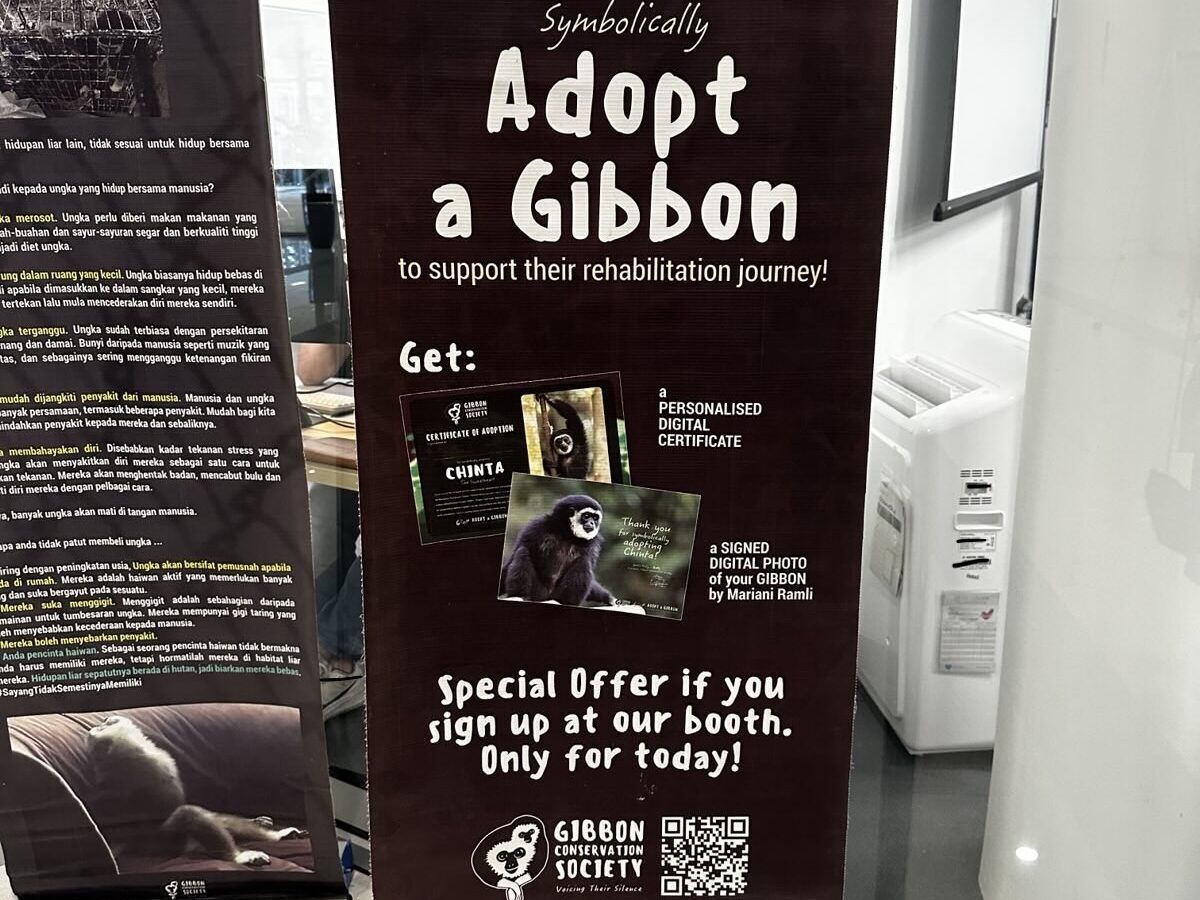
Ana and Bam shared the advocacy efforts of Gibbon Conservation Society and opened an exploratory discussion around strengthening gibbon conservation using open tech. Participants discussed and shared creative ideas like imagining a pilot project combining traditional gibbon knowledge with a digital tool — what is the project, who leads it, how are benefits shared, and what success indicators to use? It also tackled possible community-led tech solutions that could help monitor gibbon populations and habitat threats while supporting cultural resistance to destructive development .
Looking Forward to the Next
Towards the end of the Open Tech Camp, the participants came together and were asked to share something new/cool/ interesting they learned or something they need to unlearn or what they would do next right after the camp. The group provided various insightful answers, even comical ones, but put forth common threads which are – the participants indeed learn something new (knowledge, skills or tools) from each other, some shared that there are assumptions they needed to unlearn and as to what to do next, a lot expressed that they’ll be connecting to fellow participants and possibly explore collaborations. One concrete example of these collaborations is the official launch of the Digital Justice Network at the Open Tech Camp. The Digital Justice Network is composed of organizations, IT experts and activists from the Asia-Pacific, to support and show solidarity to various movements by launching campaigns, conducting research, and providing services in the Asia-Pacific region.
The Open Tech Camp Kuala Lumpur further shows that strengthening the digital resilience of civil society requires not only technical skill-building but also collaborative problem-solving, and knowledge-sharing, collective reimagination of digital infrastructure and cross-border support.
“We are deeply inspired by the passion and energy that each participant brought into this space. It was more than just an unconference; it was a reminder that when communities come together, ideas become actions, and actions lead to change. We are grateful to EngageMedia and all participants for making this possible”
– Haris, ASBhive Team