On a July morning in 2024, Bangladesh’s internet went dark. This was no minor inconvenience. For freelancers, digital entrepreneurs, students, and families, the shutdown severed access to income, safety, and community. It underscored a deeper reality: internet shutdowns in Bangladesh are not technical disruptions, but assaults on rights and livelihoods, disproportionately impacting working-class communities and gig workers.
This is the world that filmmaker Taosin Md Bahadurshah Zafar captures in his short film The Black Kite, a story grounded in the lived realities of Bangladesh’s 2024 internet shutdowns. Through the lens of a disabled freelancer struggling to maintain his work and dignity amid digital silence, the film makes visible the cascading harms of internet blackouts; harms that are too often normalised or ignored.
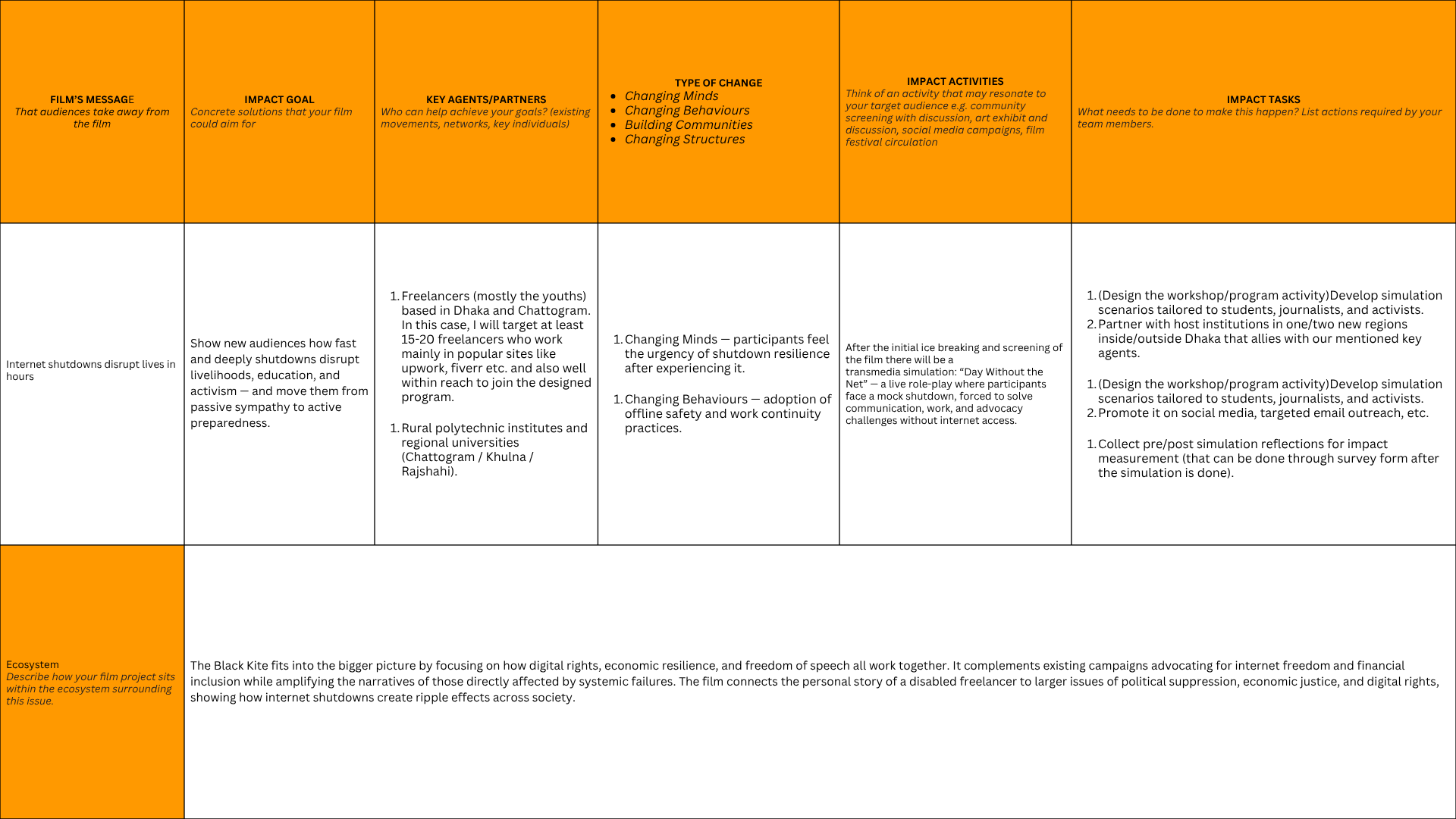
As part of EngageMedia’s Tech Tales Youth Extended Impact programme, The Black Kite has already moved beyond the screen, catalysing conversations, workshops, and practical tools that empower communities to resist digital repression and assert their rights to connectivity and economic survival. Using the specially designed Impact Campaign Builder, filmmakers identify what audiences take away from their films, set concrete advocacy goals, connect with partners, and plan activities that translate cinematic insights into tangible change. For Taosin, this extension meant bringing The Black Kite into real-world spaces where stories like the movie characters’ are lived every day.
The Black Kite and Lived Realities
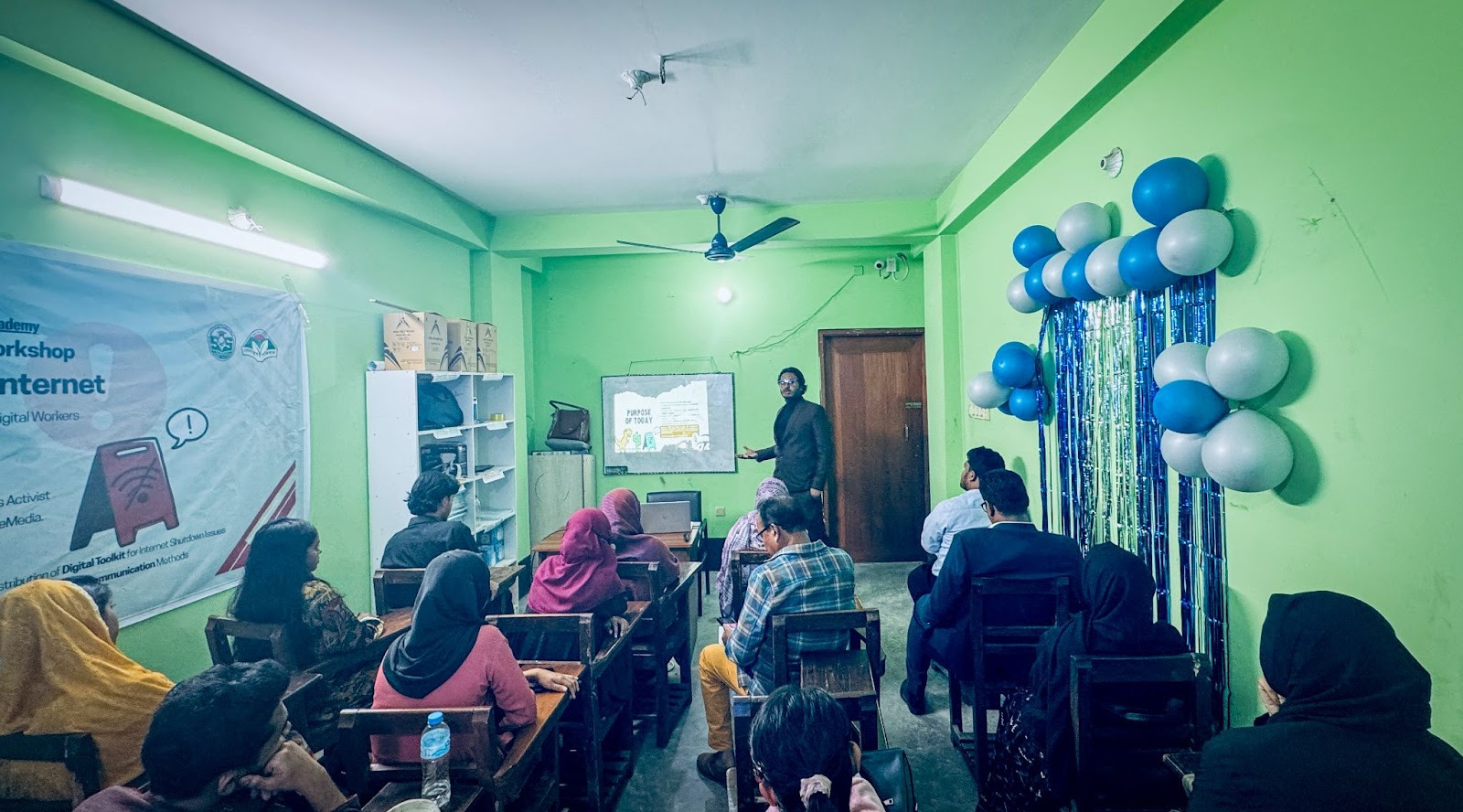
On 13 December 2025, Taosin facilitated a Digital Rights and Internet Safety Workshop in Khulna, bringing together 35 participants—freelancers, online entrepreneurs, and workers embedded in Bangladesh’s digital economy. Organised in collaboration with Sonamukh Smart Academy and the Caregivers Institute of Bangladesh, the session opened with a screening of The Black Kite, setting a shared cinematic reference point for conversations that quickly moved beyond the screen.
Reaching the workshop participants was a deliberate act of bridge-building that required navigating both institutional politics and volatile civic conditions. Rather than defaulting to familiar advocacy networks, Taosin deliberately sought partnerships with vocational training institutions. The event collaborators serve populations directly dependent on digital connectivity for their livelihoods: freelancers managing international clients, caregivers coordinating placements through online platforms, and small business owners running digital storefronts.
Organizing the event in mid-December 2025 meant navigating a city on the edge with Bangladesh preparing for its first post-uprising elections scheduled for February 2026. Amid election-related clashes, political violence, and heightened security deployments, Taosin’s decision to proceed demonstrated a commitment to bringing digital rights conversations directly to those most affected, even when conditions made such gatherings risky.
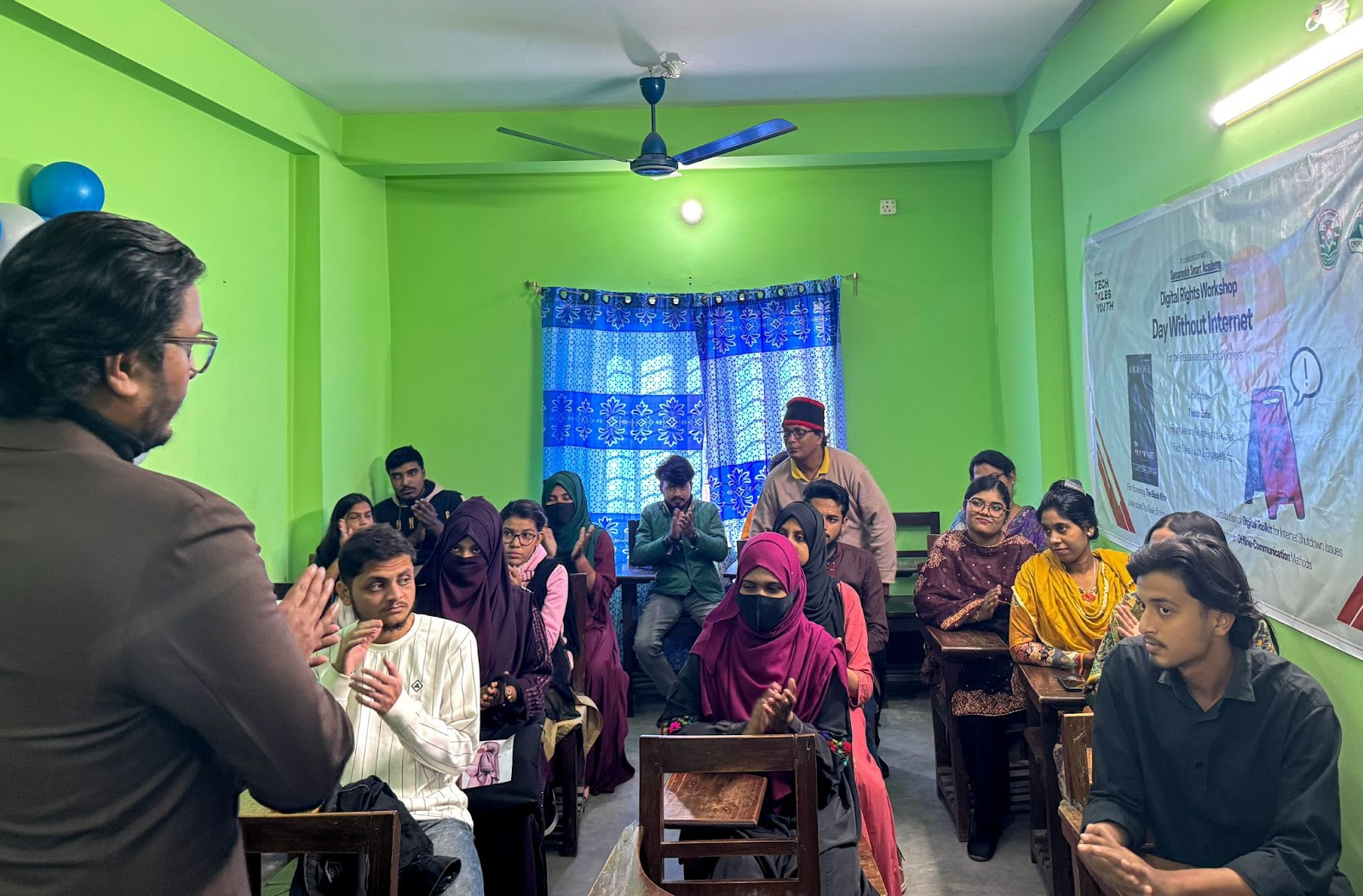
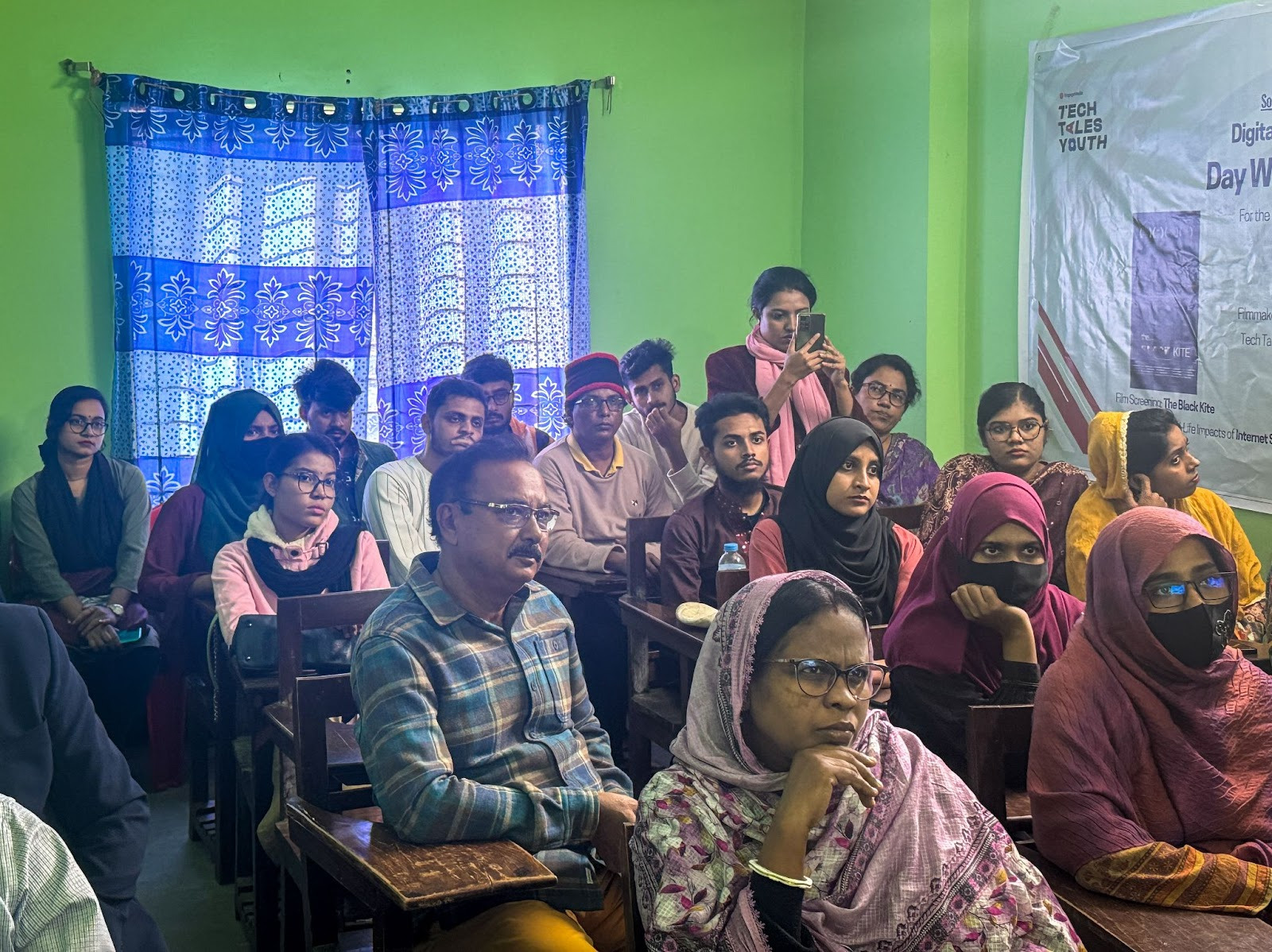
What followed, Taosin reflected, were stories that were “ordinary yet devastating.” One participant, Rony (28), described losing long-term foreign clients on Fiverr overnight simply because he was unable to respond during an internet shutdown. Another participant, Sayma (24), shared how mobile banking failures left her family unable to pay for basic necessities. A small business owner recounted watching confirmed Facebook orders disappear as customers assumed the business had shut down entirely. These were not abstract complaints about connectivity or inconvenience; they were accounts of dignity, trust, and livelihoods slipping away in real time.
Listening to these experiences, Taosin noted, fundamentally reshaped how he understands both filmmaking and digital rights advocacy. The exchanges grounded his work in lived realities rather than theory, revealing how shutdowns do far more than interrupt communication. They fracture daily routines, strain relationships, and destabilise the survival strategies people depend on to get through each day. This perspective has directly influenced how The Black Kite frames its narrative, focusing not only on repression but on the ripple effects that spread quietly across everyday life.
Beyond Story: Tools for Resilience
The workshop unfolded in three parts: (1) a screening and reflection, (2) digital safety training, and (3) hands-on tool sharing. Participants were introduced to secure communication tools and offline strategies for moments when the internet becomes inaccessible or unsafe. Platforms such as Briar, Bridgefy, Signal, and TunnelBear were discussed alongside community-based approaches to staying connected beyond digital infrastructure.
Drawing on resources adapted from organisations including Access Now and WITNESS, the session emphasised that resilience during shutdowns depends on both technological preparedness and social networks. An interactive quiz helped consolidate key learnings, followed by the handover of a digital safety toolkit to partner institutions and participants, ensuring that the knowledge shared could continue to circulate long after the workshop ended.
Towards a Connected Horizon
Looking ahead, Taosin sees The Black Kite extending its impact beyond Bangladesh, contributing to a wider global conversation on internet freedom and state-imposed blackouts. Internet shutdowns are no longer isolated incidents; they have become a recurring tactic of political control across different contexts, most recently in Iran (2026).
By situating The Black Kite within these transnational patterns of digital repression, the film invites audiences to see shutdowns not as technical failures, but as deliberate acts with human consequences. When paired with workshops, toolkits, and comparative case studies from places such as Nepal and Iran, the film helps deepen understanding of how shutdowns undermine economic stability, isolate communities, and restrict fundamental freedoms.
This global framing allows The Black Kite to function across multiple spaces: (1) as an educational resource for analysing internet access as a human rights issue; (2) as an advocacy tool that connects struggles across borders; and (3) as a creative catalyst, encouraging storytellers in other regions to document their own experiences of digital repression. Rather than remaining a record of a single moment, the film becomes part of a growing archive of resistance and resilience, demonstrating how digital blackouts, whether in Dhaka or elsewhere, disrupt everyday life, livelihoods, and the basic ability to speak and stay connected with the world. This global lens not only enhances the film’s relevance but also reinforces the urgency of pushing for universal internet access as a shared human right.
References:
https://www.reuters.com/world/asia-pacific/bangladeshs-internet-shutdown-isolates-citizens-disrupts-business-2024-07-26
https://engagemedia.org/projects/tech-tales-youth/bangladesh-malaysia/the-black-kite/
https://engagemedia.org/2025/tech-tales-youth-extended-impact/
https://engagemedia.org/wp-content/uploads/2022/03/Impact-Campaign-Builder-1.1SSN_01272022-1.pdf
https://cib.edu.bd/
https://cib.edu.bd/
https://briarproject.org
https://bridgefy.me
https://signal.org
https://www.tunnelbear.com
https://www.accessnow.org
https://www.witness.org
https://www.aljazeera.com/news/2026/2/2/irans-economy-falters-as-internet-shutdown-hits-people-businesses-hard
IMPACT VISION